Liverpool’s Policy and Our Objections, Part 4

Liverpool’s Policy and Our Objections, Part 4
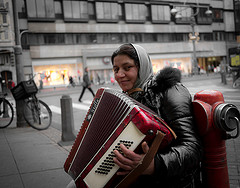
Photo: jp3g.


They say:

15. The entertainer must take all reasonable steps to manage the audience to ensure that they do not block the highway or any public place including when appropriate reminding the audience to leave a clear access along the highway, footpath or pedestrianised area. The entertainer must stop the entertainment immediately if the highway is obstructed by the street entertainment or the audience or if a risk arises to the safety of any individual or damage to the highway or adjoining structures.


We say:

Most of this is common sense and we don’t take issue with it. However, we would point out that crowds take seconds to form and seconds to disperse. They are composed of people, dynamic living beings capable of moving quickly. A person is not an ‘obstruction’. In addition, in the absence of any other legal remedy, the Council will sometimes ask the police to threaten arrest for ‘causing an obstruction’ when no actual obstruction is taking place. This kind of abuse of the law does not help build good relationships between street performers and the relevant authorities.


They say:

16. The entertainer must maintain public liability insurance covering any performance and must, if requested to do so by a Police Constable or Council Officer (or to an officer of the land owner if performing on private land), produce proof of such insurance.


We say:

Public liability insurance is a good idea. It is often included with membership of other groups like the Musician’s Union (a group which we would strongly advice any serious musical performer to join). Other performing groups like Equity offer access to public liability policies too, or they can be bought through a broker. However, whilst we recommend that performers do get public liability insurance, we also ask for a common sense approach here. Does a squeeze box player or an acoustic guitarist on a side street really need £5 million worth of public liability insurance before they be permitted to play in public? In this matter we feel that a distinction should be made between performers using more equipment and playing on more prominent pitches, and those who are not using much equipment and are playing in less prominent locations. We would hope that common sense would prevail at all times and that public liability insurance does not become an absolute requirement for street performance of all sorts.


They say:

17. Amplification

  1. Amplification of music or singing will be permitted, but not such where the volume gives rise to complaint; entertainment must not be audible beyond 30 metres of the performance above the normal level of street noise.
  2. Where amplifiers are allowed, they must be battery powered; mains or generator powered amplifiers are not permitted.

We say:

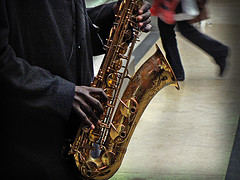
Amplification raises many issues and divides opinions. In our view, amplification is not the major issue. It is what is amplified that counts. We don’t believe that amps are the enemy – after all, there are plenty of louder unplugged instruments like bag-pipes, drums and saxophones. The principal issue here is that of consideration. Performers should take account of the time of day, the street setting and the nature of the surrounding businesses when setting volumes. However, we do not find a specified distance limit to be useful. 30m is an arbitrary specification. Sound travels differently according to wind direction, height of buildings and volume of people in the vicinity. An agreed upper decibel level would be more useful. Furthermore, we cannot state strongly enough how unrealistic it is for a local council not to receive complaints about performers, whether about the volume or some other, more subjective, feature of a performance. We therefore urge to council to strive for a fair balance between a small proportion of expressed complaints, and the unexpressed enjoyment of the overwhelming majority.
Summary of Major Objections

Summary of Major Objections

Photo: maistora.


We have one general and seven particular objections to Liverpool City Council’s new street performance policy.

In general, then, we object to the negative tone of the language used towards street performers throughout the minutes of the Cabinet Meeting where the new policy was put forward. For example:

At present street entertainment within the city centre can be intrusive to both businesses and residents alike. Street entertainers have in the past been accused of noise nuisance violations, repetitive performances, offensive/inappropriate behaviour and causing dangerous obstructions. There has been an increase in reports of abusive and offensive incidents which has caused alarm and distress to members of the general public and businesses within the city centre.

We believe this quote significantly overstates the issues that do arise from time to time from street performance, in order to provide a justification for the extensive and restrictive terms and conditions which Liverpool City Council are now requiring performers to sign up to.

Our seven particular objections to Liverpool City Council’s policy are as follows:

1. The policy uses coercive language and nebulous threats of prosecution for trespass in letters handed out to street artists and performers ahead of the new scheme, which needlessly intimidate vulnerable people and are exceptionally heavy handed. Since trespass is a civil, rather crimanal, offense, and requires material loss to be be proved,  legally highly questionable.

2. In extending enforcement powers to stop street performance on the smallest of pretexts, the policy risks turning those individual council officers and police into a poor man’s Simon Cowell in the sense that they can efectively prevent licensed performers from performing simply because they take an aesthetic dislike to your act or even to what you are wearing. 

3. The policy erroenously claims that “is illegal for persons under 18 to play, sing or perform in a street for money or monies worth”. In fact, the government’s own guidlines clearly state that “Children under 14 years may not busk”.

4. The policy is full of arbitrary specifications that make little sense. For instance: performers cannot occupy more then a 1.5m radius; sound must not be heard from more than 30m away; there can be no more than 5 people in a musical ensemble; signs must not be bigger than A4 in size; and no leaflets or demo CDs can be given away. The combined effect of all these sub-clauses is to grant officials of the council and enforcement officers due scope to endlessly chip away at performers and their ability to generate income by showcasing their talents.

5. The policy unnecessarily and arbitrarily limits the space wherein performances can take place, relegating street performance to a few officially sanctioned pitches, many of them in locations wholly unsuitable performance. Liverpool city centre has many natural pitches that performers are themselves accustomed for various reasons to performing upon: whether those reasons are acoustical, social or, indeed, economic. We favour dynamic rolling pitches with a recommendation for a 50m distance between noise-generating acts, with little restrictions on where ‘quiet’ acts like pavement artists can operate.

6. The policy requires performers to book with the council up to a week in advance to play for a maximum of two hours at any one pitch, turning what is often a spontaneous cultural event into a tightly controlled and highly limited activity. The policy is overly restrictive and needlessly bureaucratic. Street performance is, after all, a highly self-regulating business activity – those performers who are bad will not earn any money and quickly reconsider their act, whilst those who are good will flourish economically. The policy, furthermore, will make it much more difficult to make a living from street performance, thereby discouraging more accomplished acts from playing in Liverpool – the exact opposite result of the policy’s stated aims.

7. The policy discriminates against performers who use animals in their act. One owl-handler, who has a animal handling licence and £10 million worth of public liability insurance, and whose street act incorporates elements of educating people about birds of prey will be banned for no good reason.

We have gone into greater detail about specific articles of the policy in previous posts. In closing, it suffices to say that in a city which is known internationally and deservedly as a top destination for the arts and for its cultural life – as well as being the birthplace of the most renowned popular band of all time – Liverpool City Council’s new policy is a non-starter. We therefore respectfully ask Liverpool City Council to think again and come up with a policy that truly celebrates the vibrancy of street life without attempting to put street art and performance inside a tightly regulated box.